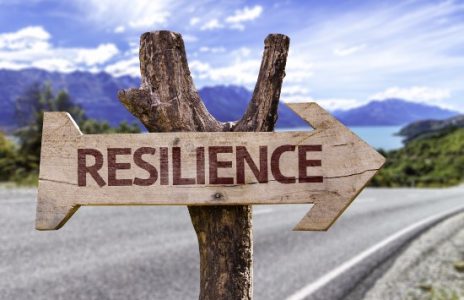
Once the pale horseman fades away

It’s not how far you fall, but how high you bounce that counts.

Zig Ziglar

As I threatened promised a few weeks ago, over the next few posts I’m going to float some ideas intended to make the New Normal we’re groping for a better place for all of us to live. Each of the things I’m going to propose are going to make at least some of you uncomfortable (Some of the concepts will make all of us uncomfortable!). But these uncomfortable times demand that each of us break out of our bubbles if we’re going to “Build Back Better.”

My focus throughout all of these essays on COVID-19 recovery is on something called “Main Street.” I trust Wall Street will take care of itself, but our Main Streets are going to need help to recover. I use the phrase “Main Street” to evoke a sense of community; a belief in neighbors helping neighbors; a trust in our inherent ability to synthesize a New – and better – Normal from our differing perspectives. And while that may seem overly idealistic, I believe that this is a time for radical pragmatism: real solutions to our real problems that we can all fight for. In this post, I’m going to focus on building a better economy for our communities.

As I’ve pointed out in previous posts, small businesses – the mainstay of our Main Streets – are the ones who have been hardest hit by the pandemic. Last Friday, John Mauldin wrote about an 80% economy in our future – with the lost 20% primarily small businesses. More importantly, the most economically fragile are the ones most likely to lose their jobs and, sadly, the ones least likely to be able catch on somewhere else due to location, education and lack of marketable skills. Many of their jobs – especially in retail and restaurants – are unlikely to come back soon. For decades our “service economy” was lauded; but I do not believe that it can lead us back to something better in its former shape.

There are going to be new job opportunities for those who can stretch to meet them – our entrepreneurs. In the service sector people will be needed to deploy and service the new tools that entrepreneurs are developing for telework and teleschool. Workers will be needed to meet health care needs with new high-tech and low-tech solutions. For example, I foresee a major role for thermal imaging at entrances of any building open to the public – preventing those with fevers from exposing others (and, ideally, at border and customers and immigration checkpoints as well). Initially this will be crudely done by hand-held instruments, requiring workers to “point and shoot” the devices. Workers are being added to support warehousing and delivery of our essentials (and not so essentials) as well.

But I see a greater opportunity for new businesses and jobs in manufacturing. Major companies are already taking a much closer look at their supply chains. Part of our recovery plan should include policies to encourage shortening our supply chains whenever possible, and encouraging our manufacturers to buy American first. But not just shorten but fundamentally change the way we think about our supply chains. For too long, our manufacturers have aimed to make their supply chains as efficient as possible – going for the cheapest source with “Just in Time” delivery. But now we’re seeing “Just-in-time” turning into “Almost never” (e.g., China preventing American factories in China from shipping medical supplies back to the US). The pandemic should teach us that resilience is not the same as efficiency; redundancy (e.g., multiple suppliers) must be built in to avoid loss and for quick recovery (or as we physical scientists say – “Entropy rules!”).

An important part of this rethinking of our supply chains is reducing our dependence on a single source: China, Inc. Our pharmaceutical industry is dependent on Chinese sources of raw materials for about four-fifths of our medicines. China is a primary source of cheap finished medical supplies (e.g., surgical masks). What hasn’t been mentioned enough is that with their Belt and Road initiative, our electronics industry has also become critically dependent on Chinese-controlled sources of precious and rare earth metals. We need to address this in our national recovery strategy – looking at the economics of recovery of critical metals from electronic and other wastes would be an intriguing place to start.

But while entrepreneurial efforts will undoubtedly create new jobs, it is also likely that they won’t be nearly enough for all of the workers displaced by the pandemic. Upgrading our nation’s infrastructure has to play a prime role in putting people back to work. We need to make existing public spaces as pandemic proof as possible. Governor Cuomo’s vision for a New York City that is both more livable and more socially distance-able is a good example. But there are a host of other actions that should be taken to ensure that our infrastructure not only meets present needs but is ready to support our New Normal. For example, rapidly building out and extending the G5 internet throughout the country, especially to rural areas. Hardening existing infrastructure while reimagining how infrastructure can support – perhaps even guide – safer and better living patterns in the future; solving the conundrum of affordable housing; recognizing the value offered by our suburbs in this time of the pandemic. Upgrading our infrastructure will be a tremendous undertaking, with the potential to put all of America back to work. Undoubtedly it will be expensive, costing trillions of dollars, but the return on that investment can be a lasting monument to our resilience.

But just giving people jobs and an income is not enough – the enduring problem that the pandemic has pointed out is that so many of us do not have any savings to tide us over in emergencies, i.e., it’s not so much lack of income, but lack of wealth. We need to find a way to help even the least skilled begin to build a grubstake for emergencies, and to seize opportunities to have a better life. I would suggest that if – as we are being told – we’re in a war, that we harken back to one of the best ideas of the World Wars – bonds, call them Rebuilding America Bonds. If we have to go into debt to repair our economy and reinvigorate our infrastructure, then let’s owe that debt to ourselves, and have that debt aimed at helping the least of us. Give us our income tax refunds in Rebuilding America Bonds. Nudge employers to include Rebuilding America Bonds as part of their pension portfolios. Encourage parents, grandparents, extended family and friends to give Rebuilding America Bonds for birthdays and holidays. Encourage states and communities to float their own version of these bonds to pay for their own infrastructure refurbishment programs, and backstop those programs at the federal level.

For not only our physical infrastructure needs repair; while we say we’re all in this together the words and actions of some are evidence that their “all” is not everyone. We also need to rebuild our trust in each other and our recognition of our common humanity.

Finally, we must – MUST – begin to seriously address the impacts of the pandemic on those just entering or just about to enter the workforce. During the Great Depression, FDR used the WPA and the CCC (enough initialisms there to satisfy even the fussiest of bureaucrats!) as a way to give meaningful work to the jobless. The Civilian Conservation Corps, in particular, gave jobs to about 300,000 youths at a time. Even before the pandemic, about 13% of those 16-25 years of age weren’t in school and didn’t have jobs. Let’s craft programs similar to those implemented 80+ years ago for today’s young people. Have them work at the community level to do needed jobs which will also help them become more employable.

Similarly, we need to think seriously about the minimum wage. While it is kind to consider raising it, it is not wise – here, wisdom is kindness through a telescopic lens, looking at the future impacts of an action. One of those impacts is that raising the minimum wage effectively lowers the boom on young people trying to get the skills necessary for employment. Whatever we decide as a nation to do about the minimum wage, we need to maintain a lower “youth minimum wage” so that there are entry points for even unskilled young people into the workforce. They need to learn the discipline of working at a job; even as they gain the experience and the satisfaction of doing the things to make their jobs a success.

We need to break out of the cocoon of fear fostered by the media – too often minor league politicians-without-portfolios playing “Gotcha Games.” We need to Go Big in our thinking and in our recovery: unleashing our entrepreneurs, rebuilding our infrastructure so that it is both more robust and better sited – and suited – to a changing world; providing our kids with the tools they’re going to need to live – and thrive – in this changing world; supporting the least among us so that they can survive – and lift themselves up – in the world as it changes. This is a different message too often unheard – borne of optimism in our ability to shape a better future for ourselves and our communities.

Minsky Moments revisited

As Dan Alesch has pointed out, we designate disasters by their triggering events, but we recognize them by their impacts. Thus, we know Katrina and Sandy by the devastation they created; had they exhausted their energies over the Atlantic, their names would be forgotten. In years to come, COVID-19 will cause all of us to shudder, even though we’ve experienced many decades of influenza outbreaks.

But why were these disasters so impactful? And, for all of them, why were there such great disparities in those impacts, even among neighboring countries (Taiwan vs China) and even communities? My answer – Minsky Moments.

A Minsky Moment is a crisis paradoxically born of stability (It takes its name from Hyman Minsky and his financial instability hypothesis). Minsky believed that a long period of stable financial markets led to ever increasing risk tolerance (and often risk-taking) which in turn led to a sudden collapse in the market. His ideas have been used to explain both the crisis in Asian markets in the late 1990’s and the Great Recession that we were slowly climbing out of.

But we see this same behavior occurring over and over again, leading to other kinds of disasters. For example, the hurricanes in Florida in 2004 and 2005 were the first major storms to hit south Florida since Hurricane Andrew in 1992. Individually, each was weaker than Andrew, but collectively their impacts were much greater (For example, Wilma – a Cat 3 hurricane – did almost as much damage as the Cat 5 Andrew even after Ivan and Charley had already done so much.). Over time, people forgot Nature’s devastation – many let their insurance policies lapse; many didn’t properly protect their homes; virtually no effort was made to strengthen buildings built prior to the more stringent building codes put in force after Andrew. People became so risk tolerant that even common sense precautions (such as properly functioning storm shutters) were ignored.

Similarly, even after the devastating effects of this coronavirus in China became apparent (in spite of the Chinese government’s efforts to hide them) in January, the President and many governors and mayors tried to downplay its potential impacts. People were encouraged to “party hearty” – Chinese New Year, Mardi Gras and others. Spring Breakers beached it even into March, and for some, sadly, it was their last Big Wave. We had not had a major epidemic in 100 years; the false alarms of the last two decades (SARS, Ebola, et al.) conditioned us to believe that the party would never end – until it did.

We take action immediately after a disaster and then as its devastation slowly fades from our memories we become more and more tolerant of risk and eventually engage in increasingly risky behavior. Almost invariably, this behavior leads to a Minsky Moment.

Sadly, there can be Minsky Moments in any and every aspect of our lives. Certainly AIDS took so many lives in the 1980s because of the risk tolerance and risky behavior that were the hallmarks of the sexual revolution and drug use in the ’60s and ’70s. We had conquered polio in the ’50s; antibiotics seemed able to cure even STDs; there was no real risk – or so we thought. And yet a virus that apparently had been lying in wait since the ’20s pounced on our risky behavior to become a pandemic that continues today.

The levees of the Sacramento River Valley provide the basis for a potential Minsky Moment in the making. Originally built to provide water for reliable irrigation of farm land, the levee system has led to unrestrained development. This residential and commercial development is occurring in an area that has seen at least six massive floods (When Leland Stanford became Governor of California, he had to use a rowboat to get to his inauguration.). When the levees breach (one estimate indicates a 64% chance in the next third of a century), the drinking water for 25 million people will be contaminated, millions will be left homeless and tens of thousands will die. All because we have forgotten the lessons of the Great Mississippi flood of 1927 (John Barry’s Rising Tide provides an excellent explanation of how bad management and engineering contributed to this event. His The Great Influenza is a worthwhile reference on the Spanish flu pandemic.). Similarly, had we remembered the lessons that Nature tried to teach us with the Long Island Express of 1938 (a massive meat cleaver – compared to Sandy’s butter knife – that carved up the Long Island Sound) much of the devastation of Hurricane Sandy would have been avoided. While some communities had wide beaches and recently constructed berms and dunes that protected them from the worst of the storm, many more of their neighbors went unprotected into that good night. And those still rage over the blight that is strangling their communities.

In too many cases, the impacts caused by extreme events – especially the human suffering – can be attributed to Minsky Moments like these. It is all too human to want to forget the bad things that have happened to us. It is all too human to believe that since no crisis has happened recently, none lies lurking in our future. But to be resilient we must go beyond our human failings – we must ensure that fading memories do not give rise to tolerance of risk, then risky behavior, and then the inevitable Minsky Moment.

Stay well!

Starting to Bring Back Main Street

The expectations of life depend upon diligence; the mechanic that would perfect his work must first sharpen his tools.

Confucius

The one thing we know for sure about our recovery from the coronavirus pandemic is that things will be different. Like Yeats’ rough beast, we will slowly slouch toward a New Normal. There are things that we can reasonably predict will happen along the way, but for now we do not know what’s at path’s end. In the next few posts I’m going to look at recovery. As the title implies, I see recovery as bringing back the Main Streets in our communities; regaining some stability and control in our lives in more resilient communities.

Recently I stumbled across a definition of resilience as purposeful action to achieve positive change. When I define victory as more resilient communities, what I’m saying is that the goal should be to rebuild communities so that they are better able to make good things happen for their members. “Building back better” shouldn’t only apply to buildings and bridges but to all of the tangibles and intangibles that are a part of our communities. To do this, we will have to reestablish community capital; all kinds of community capital.

Central to rebuilding community capital is rebuilding the capital of individuals, families and neighborhoods. Over the last decade we’ve heard a lot about income inequality, but too little about wealth. It’s estimated that about 39% of Americans have sufficient savings to deal with an $1,000 emergency. When these emergencies inevitably occur, those affected must rely on others to help them make it through: they must have social capital to cope. The question becomes “how do we help them build their capital accounts so that they can better cope with emergencies?”

Because recovery means looking at all types of community capital, I’m breaking this into several parts. In this first part, like the Confucian mechanic, I’m doing my due diligence – sharpening my tools (and wits – both of them) for what’s to come: defining the goal, and trying to see where we’ll be when the fog of our war with the virus clears.

• First, time. We can’t know when this first wave will end, but my best guess – and hope that I’m too pessimistic – is that we’ll be able to really begin on the recovery by the 4th of July. If we accept the rule of thumb that full recovery will take ten times as long as the period of loss, that means five years! There is likely to be a second wave come fall; we should be much better prepared to contain the damage to our communities than we were for this first round.

• Next, the economy. Unfortunately, the recently passed “Stimulus” bill won’t stimulate the economy very much; at best, it will allow many working people to stabilize their living arrangements – mortgages or rents, keeping food on the table. Small businesses and their employees will be the most likely to suffer. A study by the JP Morgan Chase Institute found that the 50% of small businesses had only enough cash to last 27 days. The picture was even grimmer for labor-intensive, low-wage sectors of the economy (restaurants, retail, repair and maintenance, and personal services): the financial buffer of 50% of these businesses was two-three weeks. In my small city, most of the local restaurants have tried to make a go of it via take-out only service. Today’s paper headlined that two of the most popular couldn’t make a go of it. More will follow their lead.

The most fragile businesses were the ones that with the most minority- and woman-ownership. Conversely, capital-intensive, higher-wage sectors (e.g., high tech manufacturing) had over one month of cash buffer. I’m afraid that much of the money allocated for small business loans won’t be accessed – what small business-person will want to take on more debt in a very volatile economic environment? If you’re a restaurant owner, reopening while people are remembering social distancing is risky business.

And, sadly, we’re likely going to see 8-digit unemployment figures. About 20% of restaurant workers already live below the poverty line. About one-third of our workers were barely getting by as part of the gig economy. Undoubtedly the number of cost-burdened and severely cost-burdened renters – and the number of the homeless – will spike.

• Social capital. In a recent column, George Friedman wrote that Canceling social life … cuts against not only the economy but, even more, what it means to be human. Several years ago, a group supported by CARRI* walked through a Whole Community pandemic exercise. One of the things that struck us was the potentially drastic social changes that might occur. Even before the appearance of the virus, we were seeing fewer family networks and, often, almost no contact even between next door neighbors. While many families are soldiering on in this world of social distancing, the bonding and bridging ties that hold our communities together are being further stretched and unraveled; . This is coming at a time of great distrust in our institutions: see the anti-social antics of the Spring Breakers. Once the crisis is over, I foresee something like the social upheaval of the early 1920’s after the Spanish flu pandemic. I also anticipate that both births and divorces will spike! And the elites will segregate themselves further from the rest of us.

• Human capital. The impacts of the crisis on our young people may be the greatest price we will pay, in the long-term. I’ve written before about the problems of youth unemployment; automation and increases in the minimum wage are conspiring to make many of them (esp. young men of color) unemployable. The closing of schools only adds to this. While we are seeing an uptick in online education particularly for colleges and universities, the teachers unions in Pennsylvania and Oregon have used their political power to prevent cyber charter schools from accepting new students. In spite of this, “teleschool” is probably an idea whose time has come.

• Institutional capital. Many of our government institutions have been conspicuous in their incompetence. Closing our borders undoubtedly bought us some time to prepare but – without doubt – we frittered that away in bureaucratic failures. But the rot goes beyond that – our responses to so many of the crises we’ve faced in recent years demonstrates our perverse inability to take action in the absence of a crisis.

Thus, I believe that the national recovery effort will trigger one of the seminal battles in our nation’s history: pitting those who still believe in our federal system of government against those who believe that we must fundamentally change our expand federal power while limiting state and local autonomy. While I want to remain nonpolitical in this essay, our response to COVID-19 indicates that – wherever we are between these two poles – our nation needs to find an approach to crisis management that is faster and more effective.

Once we get through this initial stage of the virus, the real work will begin: rebuilding our economy and reknitting our social fabric. Undoubtedly, some – many? – of the details surrounding my projections of where we’ll be when we begin recovery planning will be proven wrong. However, I strongly believe that the goal is right: building more resilient communities; communities better able to take action to improve our lives. Whether right or wrong, the most important thing is to have a goal in mind for recovery and then to plan and above all ACT to achieve it.


* Jane Kushma, Andy Felts, Susan Kammeraad-Campbell, Charlene Milliken and I.

Pretty heavy stuff! On the lighter side, I recently stumbled across an apocryphal letter from F. Scott Fitzgerald on his approach to social isolation during the Spanish flu pandemic.

The officials have alerted us to ensure we have a month’s worth of necessities. Zelda and I have stocked up on red wine, whiskey, rum, vermouth, absinthe, white wine, sherry, gin, and lord, if we need it, brandy. Please pray for us.

Once the parties start again

We’re now in the third month of dealing with the coronavirus pandemic in the US. In some ways our collective response to this has been effective (e.g., closing the borders), in some ways not (e.g., politicizing the pandemic). We are clearly learning as we go – as we should – and our response efforts are getting better focused. But the pandemic is both causing problems that will last long after we have the pandemic under control, as well as shining new light on existing problems that we haven’t solved.

Taiwan has done exceedingly well in dealing with the pandemic. Even though next door to China, only two deaths have been reported so far (By comparison, Italy’s per capita death rate from the virus is almost 1000 times higher.). Taiwan’s success is due in large part to their taking a hard look at their response to SARS in 2004. They built a crisis plan based on what they learned and have successfully implemented it. Their approach to the crisis has been different from ours and other countries (See here for a nice summary article and to get to a list of the actions they’ve taken.). I hope we in the US will do the same after this crisis passes. In this post, I want to pose some questions that I hope will be considered (starting with gathering appropriate data). I’m focusing on impacts to our communities; there are many others that need to be considered as well.

What is the “aim point” for our response in the future? The current strategy in the US is aimed at limiting the number of deaths from the virus. Thus, we’re not really trying to prevent the virus from occurring; rather we’re accepting that people will catch the virus but trying to slow down its spread. If we are unsuccessful, then people will needlessly die because we don’t have enough ICU hospital beds, respirators and ventilators to treat the potential spike in cases. If we had a cure OR a vaccine OR more hospital beds and needed equipment, we could potentially employ a different strategy.

How will those who live in cities and those in rural areas do? I must admit I have often been bemused by our country’s lurch toward urbanization. Cities concentrate risk – you’re more likely to be exposed to the virus if you live in a city (New York City is currently experiencing a death every hour.). Conversely, cities also concentrate resources – there are more hospitals, medical equipment and medicines in cities to deal with the sick. In the Spanish flu epidemics of 1917-19, mortality was less than 1% in urban areas (probably due to partial immunity from previous influenza outbreaks) compared to up to 90% in some rural communities. Right now, we have too few ICUs in rural communities and too many cases in some of our cities. We need to recognize that rural and urban health care needs are different and develop better means to address both. But to do that we need to have a better handle on what those needs are.

How will the homeless fare? Most of the permanently homeless are in poor physical and mental health. Most of them are men. Drugs, alcohol, and poor environments have compromised their immune systems. They are likely at high risk. I’m fairly certain that our communications with the homeless are – at best – spotty. We need to consider what actions we ought to take to both communicate with and care for this slice of the homeless population.

How useful were our models of the virus’ spread and mortality? As George Box famously said, “All models are wrong, but some are useful.” Our models for the spread of a pandemic are generally pretty good BUT like all models their accuracy depends on their input parameters. The ones we’re using are based on the Chinese experience, or what they’ve indicated was their experience. We don’t know how well that translates to American demographics or the American health care system.

Is the approach we’re taking to social distancing the best overall? Taiwan, South Korea have taken a different approach to achieve the same ends as our draconian shutdowns of businesses and schools. While our approach may be best for containment of the virus, we need to know how it impacts other aspects of community life, e.g., businesses, education and other social facets. We are taking action to determine the impacts on small businesses and the economy at large; we need to have the same urgency about the pandemic’s impacts on our kids’ education and our communities’ social fabric.

Can we track contacts more effectively? Tracking the contacts of those potentially infected is a key part of the strategy followed by Taiwan. This is much harder to do in our country with its patchwork of health departments at community, county, state and national levels. But I’m sick and tired of hearing the phrase “community spread” as a sort of code for “we don’t have a clue how Grandma was infected.” We can do better, but it will require that each of us takes a hard look at the balance between individual privacy and community health security.Along those same lines, we need to begin using Big Data techniques to determine potential future hot spots. There is all sorts of data indicating people flows; we need to start using them for future casting. We undoubtedly will initially stumble – make bad calls – but we can’t do better unless we start doing.

How should we deal with those crossing our nation’s borders? Our immigration policy – such as it is – is a mess. Was and is, but we need to fix it for the future. Further, many of us Americans (like She Who Must Be Obeyed) have a lot of unsatisfied wanderlust. The government took what appears to be appropriate and relatively effective action to selectively close our borders but it is clear that foreign visitors or returning Americans triggered at least some of the hot spots. While I hate to contemplate it, we need to consider actions such as required medical screening at every border entry for anyone coming into the country.

This is a difficult time for all of us. The approach we’re taking toward the virus in the US is the one most likely to deplete our social capital, at least for a while. As I’ve often said, never underestimate the power of a party – I hope the human love of partying will help us to recapitalize our social infrastructure. But once the parties start again, we need to look back honestly at the crisis past, and be better prepared for the next one – knowing full well that it won’t be like the last one.

++++++++
In my next post, I’ll turn from crisis planning to putting together a plan for coming back. Given our approach to the pandemic, what sorts of things ought to be considered in planning for our communities’ recovery?

One more thing. With all of the guidance on hand washing and use of sanitizers, we tend to overlook the obvious: healthy people are going to fare better than those who aren’t, no matter their age. All of us need to find ways to keep fit while we’re isolated. During the week, I’m usually out by 630am walking 3-4 miles. Others are using video exercise or tai chi classes. Whatever you do, please make sure you, your elderly parents and your kids find ways to stay active even while avoiding unnecessary contacts.

Where are the Heroes?

Captain Richard Phillips of the good ship Maersk Alabama – and Sully Sullenberger splashing down his crippled airliner in the Hudson River – broke through the poisonous smog of economic depression and Wall Street skullduggery with a reminder that pure individual heroism is a daily occurrence if we know where to look for it. — Tina Brown

You have to feel sorry for kids today. Who do they look up to – who are their heroes? In my youth, we had plenty of heroes. We had parents who’d either fought in the war, or who’d worked at home to supply the guys winning the war. We had a President – Ike – who’d led the Allies’ to victory against the Nazis. We had the Splendid Splinter – the last to hit .400 in a season – who also flew combat missions in Korea. We had Bobby Clemente who tragically died delivering supplies to the victims of an earthquake in Nicaragua. We had great lawyers like Joseph Welch, who dared to call out the mighty Tailgunner Joe McCarthy for his lack of decency. We had legendary journalists like Edward R. Murrow, and Huntley and Brinkley, who gave us the news without inserting their own political views.

If you get your news from the politicized and highly partisan press, all you read about are draft-dodging or dictator-doting ego-driven caricatures of Ike and JFK. Wannabe Lincolns, they are barely Fords. Today, we have too many sports stars (decidedly not heroes) whose most lasting legacies will be the bastards they’ve sired. We have a legal “giant” lauded by the media for taking on the Donald but who actually is a conman and an extortionist. And we have too many biological parents who mistake being a pal for parenting.

And yet… And yet, there are still heroes. Take the young black kid in rural Mississippi who works nights in a convenience store to pay for his days going to community college to become a draftsman. If he’s lucky, he’ll get an internship so that he can concentrate on his studies. If he’s good, he’ll get the chance to go to college and become an engineer. He wants to better himself but he also wants to provide for his family.

Peggy Prescott managed a truck stop, and occasionally drove a big rig, so her sons could play football and get a scholarship and go to college. She wanted them to have opportunities she never had. Her youngest son earned both a bachelor’s and a master’s degree, and has become a leader both on and off the football field. In honor of his mother, he founded the Faith Fight Finish Foundation which has raised hundreds of millions of dollars to help kids find strength through dealing with adversity.

What about the hundreds of captains of boats who answered the Coast Guard’s call on 9/11? Ordinary men and women, they “Boat Lifted” 500,000 of their fellow citizens away from the death and destruction on Manhattan Island. A marvel of self-organization, their collective action was both inspiring and heroic.

Or more recently, the two cops who were involved in a high speed car chase. The car they were chasing crashed and caught fire. They quickly changed from law enforcers to first responders and and pulled the two young women out of the car at great danger to themselves.

Every community has heroes like these hiding in plain sight. They work hard to better themselves and their families. They are too ordinary to make the news. But when adversity strikes, they are the ones who step up to pull themselves and their communities out of the muck. These hidden heroes are the core of a community’s resilience. We need to recognize the nobility lurking in their normal lives; we need to nurture their spirit.

Purposeful action

Lefty Gomez was famous for saying he’d rather be lucky than good (How many of you know who Lefty Gomez was?). And when it comes to disasters, there are a lot of communities that have thrived due to dumb luck. After Katrina, Baldwin county in Alabama gained lots of new residents who had well-paying jobs in Mobile – jobs with companies who had relocated from New Orleans. Older workers were almost unaffected by the Great Recession; if we had a job, we kept it. No action was required – just being in the right place at the right time was enough.

There is a tendency to call the lucky ones – e.g., Baldwin County – resilient. But they’re really not. Resilience relies on purposeful action – enabling things to go right, not just preventing them from going wrong (Hollnagel, et al.). For communities, purposeful action requires that a community recognize

• What the community is. A community’s character colors the actions it can take. Thus, purposeful action requires an understanding of the community’s structure and its social topology – the kinds of people who live there; how they are connected; who the real decision makers are.
• The community’s assets and liabilities. A useful way to look at a community’s actions is as the production and expenditure of community capital. While financial assets are important, human capital – the skills and the number of skilled people in the community – may be more important. And its social capital – the connections among those in the community, and from them to those sources of resources outside the community – is perhaps the most important asset a community can have. While a community’s assets indicate its possibilities for action, its liabilities indicate the limits on its actions.
• The community’s context. No community acts in isolation; its actions are best understood in at least a regional context. Too often, we ignore the influence of geography on community action, e.g., how Portland’s hills limit its options in providing housing. Similarly, a community’s culture and history can also powerfully condition its actions (e.g., the limits on remodeling old homes in Charleston, SC). Further, communities are open systems. People move in and move out based on economic and social conditions. A community’s economy is tied to others in its region, and often the nation and other countries. A community’s decision-making is often constrained by state government. Indeed, the size of a community in terms of action is better represented as a membership function rather than simply its population.

Purposeful action also requires that the community has a unity of purpose; an acceptance that an action will make the community stronger, better. This unity of purpose can be captured in a strategic plan, though that formality is less important than the reality of the unity itself. All the active parts of the community have to buy in to the intended direction, otherwise action will at best be halting and the results less than satisfying. This implies that the leaders of cities like New Orleans – with its plethora of organizations often working at cross purposes – face major challenges in achieving a unity of purpose and thus taking purposeful action.

Ultimately, if resilience is a manifestation of a community’s strengths, then its ability to take purposeful action is an indicator of those strengths. And, thus, an indicator of its resilience.

The Roaring Twenties (and beyond)

It’s tough to make predictions, especially about the future.— Yogi Berra

This is the time of the year when all of the crackpots with crystal balls (most of them cloudy or cracked as well) try to predict the future. I’m going to join that crowded club (some might say I’m a charter member!) but I’m going to focus on communities.

Right away, you know that any predictions are going to be fuzzy – our communities are too diverse in size, in culture and in structure for any prediction to be universally true. Thus, I will highlight relevant trends for the coming decade (and beyond) and in a later post I’ll try to project how these trends will impact communities and their resilience.

Let me set the stage by taking a quick look back at the decade just past (the Twittering Teens?). Globally, it likely was the best decade ever. For the first time less than 10% of the world’s population was mired in extreme poverty. Global income and wealth inequality – especially in Africa – was reduced. Infant and child mortality fell to record lows. Famine became all but extinct. Malaria, polio and heart disease are all in decline globally. Globally, life expectancy continues to rise (except for middle and lower class white men in the US). The world also is on a more sustainable path – in much of the first world the use of resources to make “stuff” declined; not only on a per capita basis but on an absolute basis. Look at how little raw bauxite goes into aluminum cans now compared to 50 years ago, for example. We need much less land for food production – one-third to produce the same amount of food than was needed 50 years ago. Not to mention dolphins back in the Potomac for the first time since the 1880’s!

However, in the developed world there has been a growing sense of unease. The cultural clash between populism and statism – between Big Everything and the Little Guy – has become downright vicious. Brexit and Boris; Bernie and the Donald; the Elite and the Deplorables are manifestations of societies in which Big Everything (government, business, unions…) is all about the numbers and seemingly has lost the ability to care about – or even listen to – individual people. As a result, we see more and more anti-social behavior: little things like people making U-turns in the middle of a four lane road; bigger things like preventing speakers we don’t like from speaking. This has led to near-gridlock on the national level, which is trickling down to many communities.

This cultural clash has been compounded by social media that have devolved into echo chambers. From where we live to where our kids go to school to who we interact with on Facebook and Twitter to what we watch on TV, too many of us are only hearing what we already believe from those like ourselves. Too few of us are willing to listen to thoughtful people who see things from a different perspective. As a result, we seem to be stumbling around the problems that surround us because our ideological red- or blue-tinted glasses keep us from seeing those problems and their possible solutions in proper perspective.

Perhaps one of the most important trends for communities center around population. Toward the end of this decade, and especially in the next, the Baby Boomers will start to exit the stage. They’ll take with them their pension liabilities and their health issues. If communities can survive the pension woes coming this decade, they’ll likely have more to spend in the 2030’s.

However, many communities will have a hard time doing that. The exodus from the high tax states (e.g., CA, NY, IL and NJ – the ones with likely the most unkept promises to retirees) will continue. Florida, Texas and the other southern states, and some of those in the western US, will experience growing pains as they try to accommodate the newcomers (Austin’s problem with homelessness – and the city’s non-solutions – sounds like something from California.). Immigration will add to these stresses.

College towns are likely to feel an even bigger pinch. The much smaller generations born after 1965 will lead to closures of many institutions of higher education (one study predicts one in six), or mergers (one study predicts one in five). If the push for free public education reaches fruition, private IHEs – relying as they do on tuition – will put in a vise. In turn, this will reduce the financial, human and social capital of their home towns.

Economically, the US will – at best – muddle through; the economies of much of the rest of the developed world are essentially stalled. Even China’s amazing growth seems to be slowing. There likely will be another recession within the next five years in the US (maybe sooner; Europe is probably already there), with the potential to rival the Great Recession in impact. However, the Federal Reserve and other central banks (with their near-zero to negative interest rates) and national governments (with their mountains of debt) will have even more difficulty responding to this one; recovery will be even slower. And it appears that the policies of the Federal Reserve and other central banks will continue to punish savers and inadvertently promote wealth inequality. The coming recession will reduce the apparent wealth at the top end, tbough. I intend to examine the “wealth gap” in a later post – closing it in a wise manner could have a huge impact on our communities.

A recession will likely accelerate two other trends: business consolidation and the growth of e-commerce. The growth of government regulations and the pressure of global competition has led to a situation in which every major industry is dominated by only a few companies. Credit Suisse estimates that by 2025 over one-fourth of all the malls in the US will be closed. E-commerce will make up to at least half of the retail economy by the end of the decade. Recession, business consolidation and e-commerce together spell big trouble for small businesses. After the Great Recession, job growth was dominated by intermediate and large companies for the first time; generally smaller businesses have been the driver of recovery. And small businesses are the lifeblood of the downtowns of many small and intermediate size communities. They’re the ones who sponsor youth sports teams; notices about community events are posted in their windows; they are often the anchors for the community’s sense of place.

Small businesses are also the entry point for most young people into the workforce. Spain, Greece and our own experience in the Great Recession point to disproportionate youth unemployment (This is also an unintended consequence of raising the minimum wage). Some of these youth will become isolated from their communities; with the potential for increased crime and drug use.

In fact, youth unemployment, in fact all employment will continue its inexorable change. As my friend Andy Felts is fond of tweaking me about, AI (and, more broadly, automation) will continue to erode the need for low-skilled workers. Past revolutions/evolutions in the nature of work have generally led to the need for roughly the same workforce in terms of numbers, but very different skill sets. Less farmland needed for food production and consolidation have led to fewer farms and farmers. We frankly don’t know what the advent of self-driving trucks and cars may mean for employment of cab and truck drivers, for example.

And perhaps the least recognized trend – the compression of time: the accelerating pace of change. Our communities are being assailed by demographic and social change, changes to their economic and environmental landscapes, and most of all changing expectations by their members. These are coming at communities faster and faster. As pattern seekers, our community leaders generally expect to have as much time to respond to these changes as they had “the last time,” but that expectation is no longer valid. To adapt to these changes requires both time and a willingness to take action. This places a premium on a community’s ability to foresee change and think strategically. I’ve written about this before, but I’ll explore this further in a later post.

Future-Focused Education

Don’t stop thinking about tomorrow,
Don’t stop it’ll soon be here…
Yesterday’s gone, yesterday’s gone.

Christine McVie

Over the summer I wrote about the importance of having an ecosystem that would enable the poor and disadvantaged to succeed – to rise out of poverty. I used a quote from Bobby Unser to identify the key attributes of that ecosystem – preparation and opportunity – and went into some detail about what opportunity is, and isn’t. But opportunity by itself isn’t enough – our enabling ecosystem must help the poor and disadvantaged recognize opportunities and provide them with the tools to seize them.

And that’s where education comes in. A strong educational system is a hallmark of a resilient community. In these communities everyone has a good chance to succeed. Even the poor and disadvantaged are prepared to seize the opportunities that are there for them. While there are already too many voices screaming out what an education should be, let me softly come at it from a slightly different direction.

Obviously, I’m not an educational expert (I’m sure some of you sometimes wonder if I’m even educated, or an expert in anything). But what I think we all need to focus on is education for what. That’s why the song lyrics from Fleetwood Mac – the what is to be ready for whatever tomorrow brings. I want our kids – all of them – to be ready to be able to survive and thrive in the world to come. And I want them – all of them – focused on their futures, and not dwelling on their parents’ past. After all, yesterday’s gone…

A farmer in 1800 would be doing things much the same as his forefathers in the 16 and 1700’s. By 1900, he would be very uncomfortable with the mechanization of farming, but would still recognize many of the basics he knew. That same farmer really would be lost in the world of precision farming based on information technology we have today. Further, he would not be able to cope with the accelerating pace of change in our world; that didn’t happen in his.

So, to me, a future-focused education has to provide the following:

An accurate understanding of the path to the present and possible futures. As I’ve often said before, trajectory doesn’t have to be destiny, but it takes action to set a different course. To be future-focused means knowing how we got where we are, where the world is heading and what its drivers are. This means our education system has to provide an accurate picture of what we know about our past and our present and where the world may be going. That picture can’t be black and white; whether we like it or not, we’re awash in a world of grey. And the picture shouldn’t be just shades of red or blue.

To be more concrete, let me use climate change as an example. The global climate is changing; it is getting warmer on average, and has been (by fits and starts) since the 1700s. Sea levels are rising on average. But the sea level at some locations is actually falling; some locations are actually seeing a long-term cooling trend. Students need to understand what is happening to their local climate. Coastal development coupled with poor land use decisions has resulted in greater devastation due to storms, i.e., the number and intensity of the storms we’re having has stayed about the same but the damage is greater. Students need to be taught the facts not just about climate but about the drivers that have put so many people and so much property in harm’s way.

The ability to learn. The amount of new knowledge is growing exponentially; there is no sign that this is abating. No one can expect to grasp all of it. But being future-focused requires that we are able to restock our mental shelves with new information and cast aside what’s no longer useful. Many have talked about the skills and sources that are necessary for continued learning; often overlooked is the personal element that has to underlie their use. Our education has to help us to find our place in the global kaleidoscope. If we know that and understand the world around us and how it might change we can begin to apply the general lessons of how to learn to gain the knowledge we will need for future success.

Opportunities to form networks. We humans are social animals. For most of us, the networks we form are important components of our success. Throughout my life I’ve been fortunate to have lots of chances to network. As a kid I played football and baseball and soccer in school; I acted in plays; I worked on the high school yearbook. Throughout my life, the networks I’ve formed have provided social and emotional support when I needed it, and helped me to what’s been a great career (or three). Very importantly, my networks have been great indicators of future trends for me.

Our educational system needs to help students form their own networks. These are formed naturally through participation in sports teams, special interest clubs (e.g., chess, 4H, computers, gardening), music or drama groups, or junior ROTC. Not all kids will form lifelong networks (you can lead a horse to water but you can’t make it drink) but we need to make sure they have the chance.

Confidence. Confidence is probably the most overlooked component of success (this applies to communities as well). If you have the confidence of accomplishment you’re more likely to take steps to better yourself. No matter how benevolent our governments, the poor ultimately have to take the steps to lift themselves out of poverty. That means they need to have accomplished something or have developed some special skills (forming networks is one of those skills) to give them the confidence to act to better themselves. Participation in network-forming activities can provide this confidence, but there are other ways – sports, academics, home ec (for women and men), shop (ditto) – where accomplishment can lead to confidence.

In a previous post I noted that kids need “the experience of working with their hands. We have too many who took on too much debt going for a college education that hasn’t prepared them for a career. We need people in the crafts and trades – especially when disaster strikes. Roofers, plumbers, electricians even at the bottom of their professional ladders make much more than the poverty level, giving them the chance to accumulate some wealth.” Becoming confident is arguably more important than simply acquiring academic skills; we’ve all seen examples of kids with high grades who had virtually no life skills or street smarts.

Communication skills. Whether you’re a plumber or a CEO, you have to acquire information if you’re to succeed, especially as the world changes around you. That means you have to be able to read. In a networked world, you have to rely on others sometimes; that means learning to write and to speak coherently. Public speaking is probably the most basic of these skills; it needs to have greater emphasis in education. And our globalized world increases the value of being able to speak a foreign language.

Financial literacy. In an earlier post, I mentioned the importance of being able to handle money. All children need to become financially literate. Ignorance leads to bad decisions in handling money which leads to a lack of reserves when times get bad. This is especially important for the poor; they have less to manage and the greatest need to manage their money wisely.

Technological literacy. Information technology has been the greatest accelerant of change the world has ever seen. However, we are on the cusp of even greater change brought on by the intersection of information technology, psychology and the health sciences. The nature of work will change; life spans will potentially become much longer; how we learn will change. In other words, technology will continue to be a major change agent shaping our futures. Technological literacy thus has to be a key component of a future-focused education.

Ultimately, community resilience is predicated on people and institutions ready to take on the future. That’s why education is more important now than at any time in the past. But education cannot simply be a presentation of a panoply of facts; it has to be focused on preparing everyone – especially the poor and disadvantaged – for the future. Unless the young acquire the knowledge and skills I’ve listed, they will be ill-equipped to deal with future change. And thus our communities will be less resilient. Don’t stop thinking about tomorrow.

The challenged and community resilience

Several years ago, CARRI embarked on a massive undertaking focused on developing – and then testing – a community resilience system.  During a meeting of its Community Leaders Working Group, I was asked why we had included “The community works to maximize the value of those with special challenges” as one of our important community functions.  In fact, two of the most in-my-face questioners (both former mayors of sizable cities) actually accused me of being politically correct (If this were true, it would come as a huge shock to anyone who has ever worked with me, not to mention my wife!).

I thought it would be worthwhile to talk about who are the challenged, and why it makes practical sense for communities to treat them as potential assets, not liabilities.

If we look at our communities today, 5-10 % of the population have some debilitating mental or physical condition.  One in eight Americans receive at least part of their food through food stamps; one in five of our children lives in poverty or extreme poverty.  Those with disabilities are 1.5 to 3 times more likely to live in poverty than those with no disabilities. Fully one-third of those who could be employed have exited the labor force.

After a community is hit by a disaster, recovery makes huge demands on the permanent personnel who actually keep the community running.  More people are needed to remove debris.  More people are needed to handle the flood of permits for rebuilding.  People are needed to reconnect families and to help get services to those who need them.  Many communities meet these needs by hiring “outsiders” to provide these services, but if they do so, they lose in at least two ways. 

  • These communities send the resources to pay for these services outside the community.  Since the federal government will pay for many kinds of temporary workers after a disaster, it makes good sense to hire these workers from within the community – to keep as many precious dollars within the community as possible.  The challenged – particularly the employable unemployed – should be the first resource tapped by a community (To their credit, BP agreed to do just that in southern Louisiana communities affected by the oil spill.).
  • These communities have to spend more of their resources helping the challenged recover from the disaster than they otherwise would. That means much less accomplished with limited resources and possibly a longer recovery period.

In other words, communities who don’t use the challenged to aid in the extraordinary challenges of recovery are turning potential assets into real liabilities.

Thus, by making use of its members who face significant challenges to meet the extraordinary demands of recovery from a disaster, a community can keep dollars in the community while maintaining a more productive and motivated permanent staff.  This isn’t political correctness but enlightened self-interest.

Dispatchable capital … and an announcement

A defining characteristic of community resilience … is that resilience includes multiple dimensions … encompassed by six assets (or “capitals”) across a community: natural, built, financial, human, social and political. – National Academies

Recently, I had occasion to read the National Academies’ report on building and measuring community resilience ( from which the quote above was taken; the report is available here). Jennifer Adams and I are working on a paper together on the application of stress testing (as is done by financial institutions) to communities, and this report will be one of the references. Together these prompted me to rethink what it means for a community to become more resilient.

In the quote above the National Academies’ committee refers to Flora and Flora’s seven community capitals (BTW – I wonder why they didn’t include “cultural capital.”). They lament – accurately – that few (I would say “none!”) of the tools that claim to measure community resilience actually measure all of these. I think there are several reasons for this:

• We know these community capitals are important for resilience, but we really don’t have a common framework that ties them together;
• Lacking this common framework, it’s not clear what we should be measuring (e.g., the “currency” for each type of capital);
• We know they are – or at least should be – important for resilience, but we lack a detailed basis for applying that knowledge in our communities;
• Specifically, this means that we’re not exactly sure what impact increasing one or more of these capitals has on a community’s resilience.

In the following, I’m going to focus on recovery from disaster, as well as the nature of capital. I’m going to create a new phrase – dispatchable capital or assets – to try to tie these two together.

Those of you who’ve stuck with me for a while probably recognize that most of my writings on community resilience have been aimed at systematizing the concept and making it more of a scientific field of study. My motivation has been that by doing so we can build up a cohort of community resilience “technologists” who will use the science to make our communities better. As part of that effort, about two years ago, I developed what I called a practitioner’s model of community resilience.

This was based on my attempt to weave together several intellectual skeins to help me make better sense of all of the information that’s out there. I was heavily influenced by the modeling work of Scott Miles, Cimellaro, Florio and others; the “indicators” work of Cutter (and a host of others); and conversations with Liesel Ritchie and with the COPEWELL team at Johns Hopkins (This is not to tar them with my own brush – my mistakes are my own! – but merely to establish that I pay attention to what others are thinking.). The model was presented as

Functionality =
Initial Functionality + Direct Impacts + Indirect Impacts + Competence•Resources,
for each part of the community

The cartoon below is intended to illustrate what the words mean. If a disaster occurs, each of the community’s “common functions” (e.g., providing water, providing shelter) undergoes direct and indirect impacts. These give rise to a loss of functionality (denoted as L on the cartoon). The community recovers that functionality by deploying resources (R). Its competence in doing so (w) can be thought of as its efficiency in using resources.

Let me take a wild leap here – think of the resources to be deployed as community capital. Since physical damage (e.g., to infrastructure) from a natural disaster will require financial capital for recovery, I’ll look at that first and then try to generalize to other types of community capital. Liquidity is a term often used in finance which simply represents how easily a financial asset can be deployed. Cash is the most liquid asset a community may have available; land is probably the least liquid asset most communities have. Since we’re thinking in terms of recovery from a disaster, i.e., a long time – I’m going to use the term “dispatchable” capital to represent capital we can employ for recovery from a disaster (this parallels the idea of dispatchable electricity generation that can be immediately deployed to meet changes in demand). In terms of finance, this could mean a local government’s Rainy Day Fund, homeowners’ insurance and savings, and could include federal grants triggered by a Presidential declaration (depending on the time frame).

Recovery from a natural disaster will, of course, require other types of capital as well. Damage to neighborhoods will require human capital. People to prepare permits, building inspectors, construction craftsmen and other will be needed to recover from disaster. Lack of any one of these will hinder recovery. For example, one of the factors that held New Orleans back after Katrina was that the demand for construction professionals exceeded the supply. In Dan Alesch’s great little book about long-term recovery, he cites similar examples relating to permit writers. For most communities, there will be personnel who can do the job, but simply not enough of them, i.e., not enough dispatchable capital. In addition,m different sorts of disasters require a varying mix of capitals, e.g., social unrest requires less financial capital but more institutional and social. A pandemic may make higher demands on both social and built capital.

To me this implies that more resilient communities have more of the dispatchable community capital they need for the risks they face. I know this isn’t particularly profound but I think it’s useful. If a community looks at a particular risk it faces, community capitals provide a systematic way to look at what’s required for recovery. If the community wants to become more resilient, it has to ensure that the amount of dispatchable capital – financial, human, and so on that can be readily deployed – it has will meet the demand. In some cases, that may mean setting up special financial reserve funds. It may mean cross-training personnel to handle increased demand. It may mean designating areas to be used for large amounts of debris. Or, the systematic look may show that there is sufficient dispatchable capital to meet the heightened demands of a recovering community.

And what about that “systematic look?” The National Academies’ report acknowledges the need to look at community capital, but doesn’t take the next step to actually explicitly state what that really means. In a paper I wrote for a conference three years ago, I concluded that

None of them [the community resilience measurement systems] examines community finance (e.g., insurance in the private sector or creditworthiness in the public sector), yet financial resources are essential for recovery. None of them gives more than a glance at the community’s governance (how and how well decisions are made and implemented), yet the depth of the disaster, and the duration and ultimate success of the recovery directly depend on the community’s governance. Rather surprisingly, little light is shone on the vulnerability of the natural environment, primarily because of a lack of data. For the same reason, those approaches that rely on publicly available data also provide decision-makers with little information about infrastructural resilience.

If our goal is to have a resilient community, determining how much dispatchable capital it has and will need is an important step toward that goal. In this context, recovery from extreme events depends on dispatchable capital, i.e., increasing community resilience means accumulating community capital, of all types. Our measurement systems don’t address this – yet – but they should. I hope the concept of dispatchable capital can spark discussions about how to improve them.

==========

A head’s up…

Though all of us involved with CARRI remain active in the field, none of our work is being funded through CARRI. As a result, we are going to retire the name and – more importantly – close down the website. We appreciate the work done by the Meridian Institute to maintain the site and provide us with email and other services, even without a return on that investment. Thus, this is the last of my blogs that will be posted here. We are fortunate to have several options open to us; we’ll be making a decision early in September. I intend to continue to be an intellectual provocateur (or to clutter your inbox, if you prefer). I appreciate the time you spend with me.