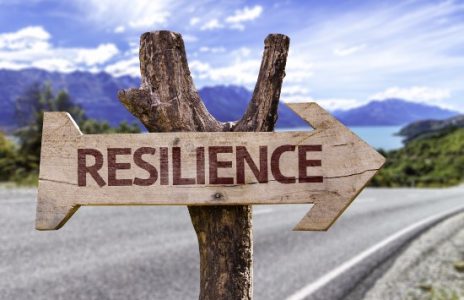
Muddling Through

Life was a damned muddle – a football game with everyone offside and the referee gotten rid of – everyone claiming the referee would have been on his side. ~ F. Scott Fitzgerald

In this series, I am presenting scenarios that represent possible Futures. In the last – The Empire Strikes Back – I laid out a “low resilience” scenario. In that scenario, the Democrats triumph in the 2024 election, and essentially take control of the government. Freedom’s light dims, and communities have little say in their own Futures. I personally don’t expect either of these to be the path we follow. Instead I expect us to “muddle through;” to use John Mauldin’s apt phrase, our country will be a bug looking for a windshield.

This scenario starts with a bang – neither Trump nor Biden win the election in the Electoral College. Kennedy wins enough states so that neither Trump nor Biden have the requisite 270 electoral votes. The election is thrown to the House of Representatives. The incoming House has a slightly larger Republican majority, but it is still close – 27 states for Trump, 23 for Biden.

The new Congress starts similarly as in 2016, rescinding many of the regulations put in place by the previous administration. However, with only a slim majority little else is accomplished. The Sestercentenial in 2026 is rather muted; lost in the uproar over Trump’s decision to forcibly expel illegal aliens from the country. Although the vast majority of the country is initially in favor of the policy, the videos of the use of force and the heart-rending separation of families turns the tide of opinion against it.

In 2028, Governor Newsom narrowly defeats Governor DeSantis after DeSantis pauses his campaign due to the recurrence of his wife’s cancer. In 2032, DeSantis wins a large personal victory, but, again, the GOP has only a slight majority in Congress. As a result, compromises that “save” Medicare and Social Security are little more than kicking the can down the road. While there is much furor over individual initiatives each side takes, our policies lurch from Left to Right and back again, with no net accomplishments by either side.

In foreign policy, China’s threat to take Taiwan by force slowly recedes as China’s leaders try to stop “peak people.” Its population (already less than that of India in 2024) may decrease by as much as 1% per year. This same niggling problem impacts the entire developed world over the next two decades.

For communities, it is “The Good, the Bad and the Ugly.” To the good, communities are able to plot their own course; ever-changing policies mean that local politicians are only responsible to their voters for what they do. The Bad – polarization leading to migration. Communities in Blue states such as California and New York struggle to deal with a shrinking tax base and blight. They face the same problems unsuccessfully faced by the Rust Belt decades before. Red state communities must strain to provide services to a welter of new arrivals. And the Ugly confrontations between angry populists and arrogant technocrats proceed apace.

Under these conditions, communities that forge lasting coalitions between local government, local business, NGOs and higher education are likely to be the most resilient. Because of their extensive connections outside the community, they are most likely to take advantage of any opportunities and be able to leverage state resources. These coalitions are also likely to be flexible – they can “stop on a dime and give you nine cents change.” They are likely to recognize that positive change is incremental, and have the patience to accept incremental progress.

* This roughly mirrors the current makeup of the House. However, the outcome could easily be different depending on the votes for House members. The Republican will probably firmly control the delegations of 26 states; they currently have control of the North Carolina delegation by only one vote. I’ve assumed that the GOP will gain hold serve there to nail this down. Conversely, the Dems firmly control the delegations of 20 states, with very slim control (one vote) of Michigan, Nevada, Pennsylvania and Virginia.

==========

Some of you may be interested in a new paper I have written that is now available online (abstract below). Published in the Journal of Critical Infrastructure Policy, it’s entitled “Making Policy for Complex Adaptive Systems.” Liesel Ritchie made the connection between myself and the journal’s editor, Rich Little; I’m most grateful to her!

Abstract:

We have come to rely on a variety of systems – social, economic, environmental – in our modern world. All of these systems are made up of people, working together, to carry out an important function. All of these systems are complex and adaptive. In the face of change, they each may react in different ways, often unpredictably. If they are unable to react to the stress caused by change rapidly enough, they may fail – no longer providing the product or service we’ve come to rely on.

Unfortunately, many policies are being enacted that do not recognize the nature of these systems. Though often well-intended, policies made that do not consider the systems that they impact can lead to failure of those systems. We use the rolling blackouts that began to afflict California’s electricity consumers in 2020 as an example of this type of failure. We conclude with lessons learned to help policy makers “embrace the complexity” of these systems.

The Empire Strikes Back, or, Revenge of the Woke

This country is never going to move forward unless we end Republican rule in the House and Senate. ~ Bernie Sanders

In this series, I am presenting scenarios that represent possible Futures. In the last post of this series – the Triumph of the Trads – I laid out a “high resilience” scenario. This scenario was based on a resurgence of more traditional American values, and the muting of “woke-ness.” This post is thus the inverse of the previous ones.

In this scenario, President Biden and Vice President Harris are re-elected in 2024. Shortly after the election, a highly embarrassing on-screen moment leads the Cabinet to invoke the 25th Amendment. President Biden then resigns, admitting that his downward spiral is irreversible; within months he dies.

Harris becomes President at a difficult time. While the Democrats have won the White House and the House of Representatives, the Republicans have won the Senate, making it difficult to ram through legislation. The Russian-Ukraine war is dragging on. China has stepped up its provocations against Taiwan. While Hamas has been destroyed, Iran has found other ways to ratchet up its proxy war against Israel. And the border crisis rolls on.

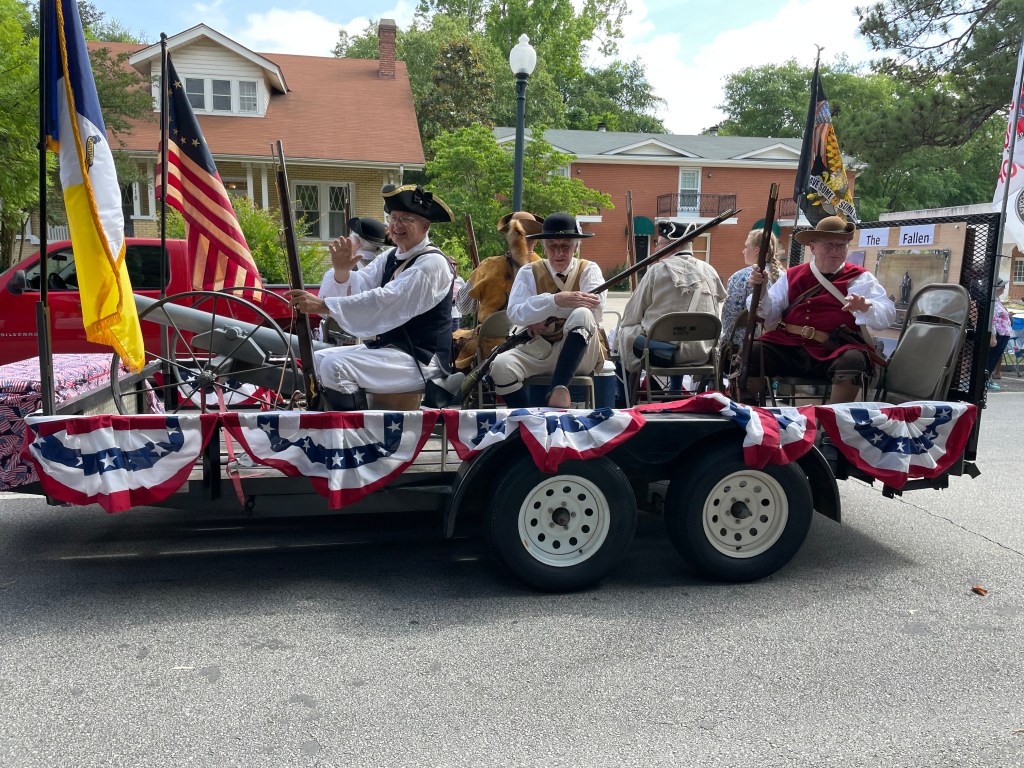
The Sestercentennial celebrations in 2026 are marred by protests (many violent) and a variety of demands that all have some form of “social justice” in common. More disturbingly, in 2027, the BRIC counties band together to knock the US dollar off its perch as the global reserve currency. As a result, the cost of imports skyrockets, resulting in stagflation – high inflation and a jump in unemployment – in 2029.

The President counters all of this by

  • Colluding with the media to hide or obfuscate all of the potential bad news;
  • By Executive Order, directing federal departments to establish Offices of Information Management to “counter the flow of mis- or disinformation;”
  • Setting up a new office in the Department of Justice to aggressively pursue those who “knowingly spread mis- or disinformation.”

As a result, American free speech becomes something like that in Scotland under its Hate Crime Act. You can say anything you want, but it is likely that you’ll be prosecuted if someone is offended, especially if that someone is a federal bureaucrat.

In 2028, things take a turn for the worse – in a lightning raid, China seizes Taiwan before we can even mobilize our naval forces. This is barely mentioned by the mainstream media, but it is a rude awakening for our allies. NATO effectively splinters; Ukraine falls; in spite of US opposition, Israel bombs the Iranian nuclear sites touching off a major war in the Mid-east.

The 2028 Presidential election finds Governor Newsom of California against Governor DeSantis of Florida. In October, DeSantis suddenly withdraws because his wife’s cancer recurs. This means that the Republicans are not on the ballot in several states and Newsom wins. As a result, he begins to implement what had been done in California in the rest of the country.

Ballot harvesting becomes the Law of the Land. Illegal immigrants are given the right to vote in federal elections. In the 2030 elections, the Democrats win control of both houses of Congress. In 2032, Newsom is reelected, and the Democrats win supermajorities in both the Senate and the House, realizing Bernie Sanders’ Dream. As in California, only “woke” opinions are allowed – Congress passes and Newsom signs a law that makes it illegal to say anything that offends anyone of any protected class.

After being reelected, Newsom is faced with the potential insolvency of Medicare and Social Security. He solves the former by replacing Medicare with a new National Health System. He replaces Social Security with a Universal Guaranteed Income. He pays for the latter by seizing the bank accounts of everyone worth $400,000 or more.

This scenario is perhaps the worst for communities. They are under extreme stress. Those economies that have relied on exports find that their products are no longer cost-competitive. Under this scenario, any brakes on the federal bureaucracies are effectively eliminated. The federal government effectively decides what communities can and cannot do in the face of Wild Things. Instead of a Culture of Accomplishment, communities take on a Zero Sum mentality (like the South after the Civil War) – no one can gain anything unless everyone does. The quality of life in our communities tanks!

This is the “Low Resilience” scenario. Communities have few resources, much less say in how they can be used, and a polity best characterized as cynical and full of resentment.

My personal view? Our country now stands at a crossroads looking at signposts toward the Future. One signpost points to the Triumph of the Trads: a reaffirmation of the American Dream – a government and a society that functions as if people – you, I, our kids, all of us – matter. It points to a country that provides plenty of opportunities to achieve our dreams, and in return asks only that we respect each other’s aspirations.

Another signpost is toward a land of supposed equity – the Revenge of the Woke. No one can advance unless all do. A country willing to be mired in mediocrity that not only disrespects our aspirations but actually seems to fear those who dare to Dream.

There is another road leading off from the crossroads into a dark forest that has no signpost, one that finds us muddling through without a coherent direction. In the next in this series, we’ll look at a “Muddling Through” scenario.

An Age of Corruption

People who live in an age of corruption are witty and slanderous; they know that there are other kinds of murder than by dagger or assault; they also know that whatever is well said is believed. – Friedrich Nietzsche

As some of you may know, my daily routine starts with a 4-5 mile walk every weekday. This is my time to cogitate and try to make sense of what I know, have read, or have inferred about the world around me. Few distractions (almost no cars on the road at 615) in the darkness.

The other morning I was thinking about what the age we’re living in should be called – Anthropocene, Ignoramuscene … the Age of Stupid? Nietzsche’s quote, however, seems an all-too-accurate description of our modern world. We’re witnessing the attempted murder of Responsibility. Our culture has become a caricature of what it once so vibrantly was, corrupted by a lack of accountability.

When parents turn raising their kids over to the educational system or social media or …, the kids go from being Johnny, Mary, Lakeisha, and Juan to White male 53, White female 27, Black female 31, Hispanic male 22, i.e., they become identitarian statistics. No one is ever held accountable for mistreating or not educating statistics.

Our history has either been forgotten or so badly distorted by Hannah-Jones’ bastardization of Howard Zinn’s communist re-imaginings to be unrecognizable. Our “leaders?” A demented dolt and a braggadocious narcissist. Our “humorists” – whether Colbert on the Left or Gutfeld on the Right – are indeed witty but simply aren’t funny. Their mean-spirited sarcasm is more aimed at de-platforming – a form of social and economic murder – than of satire. Our supine press publishes the verbal scraps handed them by Government without questioning or probing their veracity. Even our Science is perverted by partisan politics.

We know that many of our educational institutions at all levels are failing too many kids. The disadvantaged have probably been hurt the worst. When the majority of kids in schools in our largest cities get social passes but “graduate” without being able to figure or read – or think! – something’s wrong. When over one-sixth of our young women contemplate suicide or have other mental health issues – something’s wrong. When our health establishment pushes “gender affirming care” as the answer to our kids’ mental health crises – something’s wrong. When the pill pushers pump our young men full of Ritalin or Adderall to tame their “toxic masculinity” – something’s wrong.

Perhaps the most atrocious indicator that we are living in an Age of Corruption is how seemingly blasé we have become to Corruption itself. In my youth, a muck-raking journalist exposed that the Chief of Staff to our President had received gifts of $1,000 in paid travel and a vicuna coat; Congressional pressure forced him to resign. Today, we have the sad spectacle of Congressional sophists ignoring millions of dollars of bribes to our President’s son by hostile foreign governments, and billions of dollars to be “managed” by a President’s son-in-law from a shaky ally. And the press seems unable to muster the muckrakers to uncover what these foreign governments have received or hope to receive.

A dark portrait of our Age, but one we can brighten. First, we must rebuild trust in our institutions. This starts by electing real leaders – intelligent people who are worthy of our trust; who care about our communities, our nation, and all of our people; who have the courage to make the tough choices; who hold themselves and those they work with accountable regardless of party.

But at the same time, we as parents have to take responsibility for raising our kids. That starts with recognizing that we – and no one else – are responsible for their passage from child to adult. Yes, the schools should play a role – teaching the kids to read, write and think critically. But if their schools aren’t doing that, or if the schools are indoctrinating them rather than teaching them, then we have both a moral and legal obligation to ensure the kids’ education in some other way.

One of the things that we as parents can do is make sure that the schools set standards and hold our kids accountable for reaching them. I recently read a nice piece in the Free Press about the Classical Education Movement. It is sort of “Back to the Future;” its foundations in the classical trivium and its focus on enabling critical thinking as preparation for training in a vocation. People on both the Left (Cornel West) and the Right (Ron DeSantis) have seen what this could mean for our future generations.

Our institutions need firm standards firmly enforced as well. For example, we need to nail shut the revolving door between regulators and regulated, lawgivers and those bound by the laws.

Most importantly, we need a resurgence of wisdom:

  • Understanding what is known, and recognizing what is uncertain;
  • Assessing conditions based on facts as we know them, not someone else’s idea of what the facts are, no matter how well said;
  • Using reason and logic – not emotion – to make decisions; and,
  • Holding ourselves to a high ethical standard.

If we can start on these, we can eventually pass out of the Age of Corruption.

==========

On a related note: several weeks ago, I was notified that Transparency International had published their new Corruption Perceptions Index (CPI). The CPI reflects perceived corruption in the public sector of 180 countries around the world.  I had seen previous versions (the first was in 1995) but hadn’t looked into the making of the Index. It’s really an interesting piece of work.

Transparency International uses 13 different sources of data relating to corrupt behavior (e.g., diversion of public funds), or mechanisms to prevent corruption (e.g., legal protection of whistleblowers). TI vets its sources based on their reputation, methodological reliability, focus on corruption, quantitative scalability, cross-country comparisons, and repetition over time. TI then standardizes the data to a 0-100 scale, where “0” indicates the high level of perceived corruption and “100” the lowest (I know; this does seem a little bass-ackwards!). In this year’s compilation, Denmark was the least corrupt (CPI = 90), and Somalia the most (CPI = 11).

We all “know” that corruption is an enemy of freedom and free enterprise. But we really haven’t paid attention to what that means in the real world. One way to do that is to plot the CPI against the GDP per capita of the 180 countries (GDP, adjusted for price parity, available from the CIA World Fact Book).

The blue line indicates that a country’s economy (as measured by its GDP) apparently is constrained by its public corruption. Although I haven’t found any comparable data for communities, the plot at least suggests that economic developers should pay attention to community corruption. Certainly there are other constraints – the wide range of GDP’s for countries with a CPI ~ 75 attests to that. However, eliminating corruption may be crucial, esp. for those with poorly developed economies.

The Coming Crisis: A New Age Now Begins

What rough beast, its hour come round at last,
Slouches towards Bethlehem to be born?

William Butler yeats

In my previous “Coming Crisis” post, I presented evidence from a variety of sources that we are approaching a tipping point that will profoundly impact our lives and our communities. In this and the next few posts, I’ll provide a sort of answer to Yeats’ question: what the crisis (the rough beast) will be; what its aftermath will be.

Why do I say a “sort of answer?” Because I will lay out what they might be, rather than what they will be. Our communities and, indeed, our societies are complex adaptive systems. One of the great paradoxes of these systems is that while we can explain their past, we cannot predict their future very well. In general, the path a community takes is deterministic – if we know the cause, we can predict its effect and vice versa. However, a community’s interdependencies and path dependence prevent us from accurately predicting how a community may evolve in a time of turbulence – too many causes pulling in competing directions. And in this case, we cannot even predict the nature of the coming crisis very well. There are too many trends and counter-trends swirling around so that our crystal balls are permanently clouded!

What we can do, however, is develop scenarios representing possible futures and then gauge how our communities will be impacted. While there is an infinite variety of scenarios, there are some simple rules to follow in developing one. First and foremost, it has to be plausible: there has to be a clear path of cause and effect – “and then a miracle occurs” is not allowed. It also should be consistent with current trends; it may accentuate one or more, but needs to explain why the Conservation of Momentum has been disrupted. This implies that a useful scenario is based on (and acknowledges) a set of plausible assumptions about its starting point and the relative strength of existing trends.

In this series of posts, I’m going to create four scenarios and look at their impact on our communities. As a foretaste:

  • The Triumph of the Trads. The current social war is eventually resolved in a return to more traditional values.
  • The Empire Strikes Back. The “Empire,” i.e., the Establishment, take away whatever victories the Trads have won, and the US becomes even more like Canada under Trudeau. The CCP succeeds in brainwashing our kids and the US becomes hyper-isolationist. The Common Man and Woman are faced with head-spinning changes depending on who’s being paid by whom. Our kids aren’t reading – but are living – 1984.
  • Muddling Through. We stay poised on a knife’s edge, “a bug looking for a windshield” (HT John Mauldin) but never finding it. No one really wins.
  • The Age of Scarcity. We’re way too close for comfort to this. Our depleted arsenals, our Woke military, and flabby (both physically and mentally) youth mean that a military loss (e.g., to China) would be too likely. Our unpayable debt will continue to eat up an increasing portion of our tax revenue. And the American Dream becomes something of a nightmare. Our kids get to relive the Depression like their Great Grandparents did. Social Justice Warriors starve along with the rest of us.

To set the stage for the following posts, I want to highlight the trends that will help to shape my scenarios (and potentially our future).

  • Millennials displacing Gen X-ers (and Baby Boomers), or in Neil Howe’s terms, Heroes displacing Nomads. The coming crisis is likely to have social, economic and political aspects. The Heroes will have to resolve them.
  • Underlying this transfer of power is a potentially more important trend – the passing of the Baby Boomers. The largest generation in history is slowly “shuffling off this mortal coil.” Our outsized impacts on everything from culture to the welfare state will live on. However, our outsized portion of the federal budget impacting Medicare and Social Security’s solvency will slowly disappear.
  • Our current “government by experts” is revealing just how inept its experts are. It is being assailed across the spectrum from the Far Left to the Far Right. Too many blinkered Hedgehogs, too few far-seeing Foxes. Adding to our political instability is the over-production of potential elites, each competing for power, leading to omni-directional distrust.
  • An underlying trend that is receiving far too little attention is the search for meaning. A result of each of the great crises of our past is some form of a spiritual revival, whether religious (after the Civil War and the Spanish Flu Pandemic) or cultural (the “Age of Aquarius” after Viet Nam). The unreasoning dogmatism of the climate cultists and of the Far Woke is similar to the Inquisition’s rigidity in their mindsets. I often think that Savonarola and Kendi would be kindred spirits.
  • Finally, I think it is important to recognize the similarities between the 1920’s and the 2020’s. The Spanish Flu pandemic of 1918-19 had profound impacts on the “Roaring Twenties” just as Covid had had on our own ’20’s.

Some of these will seem silly to some of you; they may all be unlikely (although Muddling Through seems quite possible). The important thing is that developing scenarios such as these can prepare us for the Future’s uncertainties; can point us toward safer paths; and can lead us, and our communities, to greater resilience.

Five Pillars of Community Resilience

Optimism is a strategy for making a better future. Because unless you believe that the future can be better, you are unlikely to step up and take responsibility for making it so.

Noam Chomsky

The other week, Claire Rubin sent me a link to an article from Beaumont resilience training – Here’s How to Use Resilience to Move out of Your Comfort Zone. The author – Laura Ponting – focuses on the personal growth of the individual, but her “five pillars” seem to fit well with my own conception of community resilience as a springboard for growth – development or strengthening – of a community, i.e., for making a community more Future-fit.

I apologize to Ms Ponting – I’m reorganizing her order to suit my [sometimes – often?] warped logic. I’ve also taken some of her words out of context, to help make my points. I’m also couching this in terms of systems; after all, communities are first and foremost complex adaptive systems (CASs). I’ll also use the Seven Community Capitals as a way to clarify some of my points.

First Pillar: Purpose. Future-fitness – growing in strength and capability – requires not just action, but purposeful action. Action — to strengthen the individual or the community. Since a community is only successful if it provides the quality of life its members want, the purpose of becoming more resilient is to safeguard that quality of life, and to improve it if possible. This is often called a vision; the community’s conception of what that stronger community will be. The community as a whole has to buy into that vision, or else it is likely that it won’t be realized.

In particular, this requires cultural capital. A common language to describe and understand that future state. A common self-confidence that breeds optimism. As Chomsky implies, without that confidence and the optimism it engenders, the community won’t work together to achieve it.

Second Pillar: Self-awareness. “Know Thyself” is not just an inscription on a Greek temple; it is the zero-th step for any community plan. For the community as a system, self-awareness means knowing who its members are. It means knowing how they are connected – or not. It means knowing the “balances” in each of its capital accounts, and the constraints or limits on the use of each capital. Most importantly, it means that the community’s leaders know how to make decisions and take action (human and institutional capital).

Third Pillar: Mindfulness. “Mindfulness” for a community equates to situational awareness. Communities as systems are in dynamic environments, with trajectories conditioned by both internal and external forces. “Mindful” communities recognize not only where they’re headed, but the forces that are driving them. The fine people at ResOrgs in NZ consider situational awareness one of the four enablers of effective crisis strategic planning.

Situational awareness rests on the community’s social capital. It requires “ears to the ground” within the community to gauge the community’s mood and its ability to move. Situational awareness also requires linchpins keenly tuned in to sources of information outside the community. They can warn the community about new sources of stress and alert the community to unexpected opportunities.

Fourth Pillar: Self-care. As individuals, we know we have to take care of ourselves. We exercise (well, some of us do). We have physicals to tell us whether we’re overweight, have high blood pressure, are pre-diabetic or any of the other warning signs the doctor looks for. And if we’re wise, we take action to avoid further damage to our vitality.

The same holds true for our communities. We know that if we fail to maintain our homes or our physical and natural infrastructure, they may be damaged in a severe storm, or even collapse from neglect. But the same holds true for our “softer” infrastructures.
• our community’s culture that, at its best, brings us together and gives us the confidence to act;
• our community’s social networks that enable us to communicate with each other, and – in times of crisis – tell us where resources are needed;
• our community’s economy that provides us with the financial capital to take action.

And just as we as individuals have physicals to point out where action is indicated to strengthen us, so too should we in our communities be aware of those signs that point out that action is needed. More frequent maintenance of physical systems, rising crime, a fraying social fabric, or growing poverty each are indicative of the need for “self-care” for our communities.

Fifth Pillar: Positive relationships. Ms Ponting couches this in terms of finding people to support us, esp. as we strive to better ourselves. The same holds true – in spades – for communities. It is simply a reflection of the economy of scale. The more resources we can bring together, the more we can do. If we work smartly (after all, two heads are better than one) we can make our communities more functional and better places to live for all of us.

But there are also traps for the unwary in this. First, “working smartly.” If we let ideology overrule reality, in other words if we don’t couple Purpose and Mindfulness/Situational Awareness, then we may actually harm our community. The debacles that so many of our big cities have become – crime, filth in the streets, the ugliness of the hopeless homeless – are monuments to failed ideologies not rooted in reality.

The second trap seems to be endemic in our age of “engagement.” Even the best of ideas can die the death of a thousand cuts in a committee. When egos are engaged, everyone wants to see a little of themselves in what’s done. That leads to inefficiencies and sometimes even alters the idea so much that it no longer supports the Purpose.

A third trap is the difficulty in overcoming the distrust and mistrust that seems to be endemic in our not-so-civil civil life. It sometimes seems that no one has the authority to act but everyone has veto power over any action. Relationships ultimately are grounded in trust. In our age, however, Trust has become a rare commodity. Thus, building positive relationships particularly in our polarized polity is not for the faint of heart.

Five Pillars for strengthening us as individuals; Five Pillars to move our communities toward a better and more secure future. That should be our Purpose. Achieving the Purpose has to be grounded in self- and situational-awareness, so we can set a realistic path from today to that better tomorrow. As we advance upon that path we must maintain those strengths we rely on to move forward – self-care. And if we can find willing partners to support us, these positive relationships can help us to advance more rapidly.

Impedance matching and proximity

It’s very important in life to know when to shut up.

Alex Trebek

If you’ve ever had an EKG or been tested for sleep apnea, you probably remember those funky sticky pads containing electrodes attached to various body parts. Back in my youth (aka “When Dirt Was Young”), electrodes were stuck on with collodion – some of you may remember how much fun(?!?) it was to get that stuff out of your hair.

The sticky pads and the collodion are there to minimize the barriers to transmission between your heart, for example, and an electronic receiver. Essentially they’re making sure that the messages your body is sending are getting through as efficiently as possible. This is called impedance matching.

Social capital in a community ultimately is about ensuring that information flows through the community to where it’s needed and can be acted upon. This is very similar to an EKG. In our communities, the social networks that connect us to our family, friends, neighbors, and to the rest of the community play the same role as the wires do for an EKG – acting as conduits for information.

But too often we forget the impedances to information flow. If I’m a migrant or an illegal alien, I’m not going to listen to a law enforcement officer or an emergency manager; in fact, I’m more likely to run the other way if I see a cop. If I’m a flaming progressive, there is little chance that a dyed-in-the-wool conservative is going to listen to anything I have to say (sadly, this knife cuts both ways). In fact, research has shown that the resistance of many conservatives to climate change messaging has as much to do with who’s been delivering the messages as it does with the messages themselves. As far as conservatives are concerned, the impedance around messages from Al Gore, Greta Thunberg or John Kerry is simply too high for those messages to get through.

The really tough problems our communities face are multi-dimensional (and probably multifarious!). Real sustainable solutions for most of them are unlikely to be flaming red or icy blue but rather various shades of purple. If we’re going to find those solutions, we’re going to have to share information and work together.

The old saw is that we have to find common ground, and I don’t disagree with that. But if we can’t discuss things rationally and respectfully, it’s hard to know where the “common ground” is to be found. Melding the idea of impedance matching with insights from the science of innovation can help us to begin that journey.

Successful innovation requires movement of ideas – information – from the thinker through intermediaries to the do-er. There are several possible paths for information flow, but the one commonality among them all is that they all rely on some form of proximity for successful information transfer. To anticipate my bottom line, proximity is a means of matching impedances to maximize information flow.

The simplest form of proximity is geographic. All other things being equal, I’m more likely to listen to my next-door neighbor than someone who lives three states away, let alone in another country (take Prince Harry … please). If one of my neighboring communities has solved a problem I’m facing, then I’m going to look hard at adapting their solution to my needs. And their nearness to me means that I’m more likely to learn about their successes (and failures!) than I am those of a town at the other end of the state or country.

But there are other forms of proximity. Take social proximity for example. I have a certain level of trust in those in my social networks. It may be conditional (”I can trust them except when the discussion is about _.”) but it means that I will at least listen to them.

Technical proximity provides another example. If the information to be transferred is in the literature, I might come upon it in my professional reading. Or, I might learn about it by attending professional association meetings. During the pandemic, much of the information used directly by restaurants and hotels and motels came from professional organizations such as the American Hotel and Lodging Association and the American Restaurant Association. These associations turned the rather turgid guidance from the Centers for Disease Control into actionable information for their members. While the CDC lost credibility during the pandemic, these organizations retained the trust of their members.

Businesses often have trading partners or alliances with other businesses. They may work together in clusters. These business interactions can also be low impedance communication channels, facilitating information flow. Cultural organizations and faith-based centers bring together people with similar values and language. They, too, can lower the barriers to information flow.

Even legal or regulatory – institutional – relationships can be used to foster information flow. Although we seldom think about it, working relationships between community and state and federal officials can also provide good working conduits for information flow.

So if I have a message, how do I make sure that it gets through even to those who otherwise wouldn’t receive or accept it? The stock answer is to find common ground. In practical terms, that may mean impedance matching: using existing relationships and information flow networks to get my message where I want it to go.

If I am passionate and vocal about climate change, for example, a message from me to conservatives likely will have high impedance. The message simply won’t be accepted. I could train to better communicate my message but the lack of cultural proximity between me and conservatives will always be a source of impedance. So if I really want to get my message across, I’m better off finding ways to use existing religious or business relationships to get my message through. In other words, I should shut up and find others who can convey the message better. I want my messengers to have as many points of proximity with the intended recipients as possible.

Ultimately, solving the really tough problems our communities face demands that Left, Right and Center find that elusive “common ground.” We can only do that if we can find ways to communicate together. Impedance matching is a way to start those necessary conversations. Done properly, we can begin to solve those problems while increasing our communities’ social capital, and their resilience.

Trust

We need to trust in order to make any decision.

The Risk Monger

Trust has been the most critical casualty in the Western world’s culture wars. We sense its loss in things big and small in our daily lives. We see the suspicious and disapproving looks of the masked at the unmasked in our supermarkets. We hear the shouting parents at school board meetings who no longer trust their schools to educate their children. We can almost taste the mutual disdain and dehumanization of the Right and Left, driven by a lack of trust. And we recognize that this same lack of trust is preventing too many of our communities from taking the decisive actions needed to improve their quality of life.

When confronted with a problem or an opportunity, without trust different parts of the community may see things very differently. Action won’t be taken in a timely manner. Bounded rationality will abound.

But while we viscerally feel the loss of trust that the pundits (Oracles of the Obvious!) loudly proclaim, we wish that they would show us – or at least give us some hint – how to rebuild that foundation of community action. In this post, I look at the nature of trust and uncover clues to building it.* I’m going to put this in terms of what we should – and shouldn’t – do. After all, if we want to be trusted, we have to be trustworthy.

One of the key facets of trust is consistency. As someone put it (I can’t find the source):

I do not trust words. I even question actions. But I never doubt patterns.

Unknown

Thus, to be trustworthy, I need to be consistent, even predictable. One of the best compliments (at least I took it as one!) I ever received was from a consultant I had just let go. “John, you know how to make a deal – and keep it.”

Another important facet of trust is familiarity. If you don’t know me, you have no reason to trust me. You may not distrust me (= trusting me to do something you won’t like), but you are unlikely to even listen to a voice never heard before. Thus, to be trusted by someone, I have to establish a connection with that person.

If a connection is going to engender trust, it has to be based on respect. I have to respect your opinions, even if I don’t agree with them. Not only do I have to listen to you, but I have to try to understand where you’re coming from. April Lawson’s Braver Angels Debate approach (There’s a link at the end of this post.) has value precisely because she tries to have participants really listen to each other. One of the reasons the CDC is so distrusted is that they disrespected the legitimate concerns of so many: they haven’t listened. “Big Brother Says So” may work for some, but in the face of uncertain science it’s not the way to build trust.

Bernd Numberger (see link at the end of the post) provides some interesting thoughts about how to build (or destroy) trust. With apologies to him, I’ll paraphrase some of them, and add to them:

Trust builders
• Collaboration. Actions speak louder than words. Working together is an excellent way to build trust, especially in the community context. Find small problems where there is broad agreement, and get warring factions to work together toward solutions. Enough of these, and trust can follow.
• Shared success and celebrations. Or, as I like to say – never underestimate the power of a party! Celebrating small successes along the way builds trust, and can lead to much greater success.
• Openness. We have to be willing to let others know who we are in a personal sense, what we value and what we believe. This can be hard to do in the face of “woke” cancel culture (especially on college campuses) but it is a form of public duty.
• Sharing. We have to share in conversations – that means we have to listen – really pay attention to what others are saying – as well as speak. We have to show that we respect the opinions of others. We have to show that we value their opinions as well – perhaps not so much for their content, but certainly for others’ willingness to be open with us. This echoes several of the thoughts above.
• “Trusted” opinions. Recommendations from trusted third parties, meaningful awards, or certifications can help build others’ trust in us. But don’t cherry-pick your sources – where there are honest differences in data sources or interpretations, admit them.

Trust breakers
• Playing the blame game. Can you ever really trust someone who always blames others when things aren’t going right? Or is always making excuses (Certain politicians come to mind?), and never takes responsibility?
• Shooting from the lip. It’s hard to trust someone who seems to always be jumping to conclusions without checking their facts.
• Sending mixed signals. It’s also hard to trust that a reed that bends to whichever way the wind is blowing will stand firm for you (Certain other politicians come to mind?).
• Not caring about others’ concerns. Would you trust someone to do something that you value if he/she is only concerned about what’s good for him/her?

All of this implies that building trust is a contact sport, and it takes time and effort. Above all, it requires that each of us is trustworthy. Trust is the glue that binds communities together; lack of trust cements barriers in place that can block community action. Trust is essential for community resilience, and for Future-Fit communities.


*I’m basing this on three sources as well as my own experience.

Bernd Numberger:
http://cocreatr.typepad.com/everyone_is_a_beginner_or/2012/02/community-of-practice-and-trust-building.html

A recent post by the Risk Monger:
https://risk-monger.com/2021/11/16/trustbusters-part-1-precaution-and-the-demise-of-trust/

An article by April Lawson (tip of the hat to Bill Hooke who highlighted this article on New Year’s Day):
https://comment.org/building-trust-across-the-political-divide/

Beyond sustainability and resilience

Sustainability is here to stay, or we may not be.

Niall Ferguson

As a few of you know, Jennifer Adams and I are writing a book (working title: The Connected Community) on systems thinking for community practitioners. The premise of the book is that systems thinking provides community practitioners – emergency managers, economic developers, city planners – with a rich set of tools to strengthen their communities.

Recently I was asked how sustainability and resilience fit into this. My initial knee-jerk answer was “Ultimately I want people to use these tools to make their communities more resilient.” Then I thought a bit, and said, “Well, actually, maybe more sustainable too.” Not satisfied with that answer, I finally said, “Really, it’s both and neither. What I really hope happens as a result of the book is that communities become more future-fit.” In the next few posts, I’m going to take a deep dive into both sustainability and resilience, and compare and contrast them. I’ll close the series with what I mean by a “future-fit” community and why the distinction is so important.

Fear of the apocalypse seems to be driving much of what’s being done in the names of both sustainability and resilience, as the quote above exemplifies. Fear of a future climate catastrophe seems to be the basis for much of what is called sustainability today. The Transition Town movement and several similar resilience initiatives are based on a presumed death of globalization, and a tumbling down Peak Oil to a valley of unknown depth.  Those John-the-Baptists who are proclaiming the coming apocalypse – whichever it might be – go on to preach from the Book of Sustainability as the Path to Resilience in the face of what’s coming. Thus, much of what is called sustainability or resilience are founded on a profound sense of despair.  

I won’t assess any of the actions suggested by the Prophets of Doom – many I find useful, some I find silly, and some are likely counterproductive – but I do want to examine the relationship between resilience and sustainability.  Is a sustainable community resilient?  Is a resilient community sustainable?  Are resilience and sustainability at opposite ends of a continuum, or at right angles to each other?

Right away, we’re confronted by a huge difficulty – both “sustainability” and “resilience” have become fads; both words have become very imprecise concepts.  The dictionary definitions of sustainability are about maintaining a certain level, or, as Wikipedia says, the capacity to endure.  In essence, this means a type of persistence.  However, if we look at the UN’s Brundtland Commission definition, then sustainability is all about balancing use of resources for current needs vs the resources needed in the future.  In what follows, I’m going consider community sustainability as meaning a wise use of resources,

  • Discriminating between wants and needs so that needs are met first, and
  • Using resources efficiently – the least necessary to meet the maximal amount of needs.

Resilience has been tortured nearly as badly.  To some it’s a process, to some an attribute; to some, it means resisting change, to some reverting to normal after a crisis.  However, resilience has one advantage in that almost all of the faddish definitions have this kernel of bouncing back after an external stress is applied.  In what follows, I’m going to consider community resilience as a community’s ability to

  • Anticipate crises,
  • Take action to reduce their impacts,
  • Respond effectively to them, and
  • Recover rapidly.

If we compare these two, we can begin to see a contrast.  In thermodynamic terms, sustainability is about trying to maintain equilibrium while resilience is a kinetic property.  In philosophic terms, sustainability is ontological, resilience is phenomenological.  Or in my terms, resilience is about time and sustainability is timeless. Resilience is aimed at minimizing the time to recovery from an upset; sustainability is focused on the resources the community uses over its lifetime. Thus, to echo those nasty questions I used to hate on the SAT, resilience is to sustainability as weather is to climate.

In the next post, I’ll use the definition of community to further illuminate the sustainability-resilience relationship.

Memorial Day

This article is a slightly edited version of one I posted in 2019.

This past week we honored those who died while in military service.  Parades were held, their graves were decorated, and speeches honoring them were made.  We were told in a variety of ways that they died so that we could live to enjoy the freedoms they fought for.  And that’s almost true – their deaths and the sacrifices of all of those in the services and their families have preserved and protected the freedom we enjoy today.  But too seldom do we ask why – why did they serve; what motivated them to endure the discipline, the danger and the drudgery of serving in the military day after day. 

Pat Tillman graduated from Arizona State University, recognized as one of the best linebackers in the country.  He became an all-pro safety in the NFL.  After 9/11, he turned down a multi-million-dollar contract to continue playing football and enlisted in the Army instead.  He participated in the invasion of Iraq, became an Army Ranger, and was then sent to Afghanistan.  He became increasingly uneasy with the war, and intended to speak out after his tour was over.  He died due to friendly fire before he could. 

The key question to me is why did a Pat Tillman – and the myriad others who doubted the rightness of the wars they fought – continue on until they paid the ultimate price.  Clearly he – as did so many others – joined the military because of his idealism.  But as one who’s been there I can tell you:  there are few idealists in foxholes.  My own experience (backed up by a fair amount of research) says that in those moments of crisis when the shooting starts the one thing that drives us is the thought that we can’t let our buddies down. 

We have been bound together by common circumstances.  We’ve all undergone the same bullying by drill sergeants.  We’ve all had to leave family and loved ones behind.  We’re all in some misbegotten hellhole and have to rely on each other for our very survival.  In short, we’ve formed a community.

And within that community, we recognize that we have responsibilities to each other.  Our local news ran a poignant story of a combat photographer who had died in Afghanistan.  Her last picture was of the explosion that took her life.  But it was the tearful words of her company commander that resonated so strongly:  “She was my responsibility. I sent her there and I didn’t bring her home.”

In our own communities, too many protest real or imagined violations of their rights while seeming to forget the responsibilities those rights entail.  No one should argue against anyone’s right to “speak truth to power.”   But those who speak – whether ordinary citizens or especially those in the press – have a responsibility to be sure that their “truth” is factual.  We’ve had way too many instances of the press on one side or the other twisting the facts (and sometimes making things up) to discredit people with whom they disagree. 

No one should argue against anyone’s right to worship their gods – or not – as they choose.  But that right brings with it a responsibility to respect others’ practice of their religion.  Just as atheists and agnostics should not be forced to participate in prayer, those who are religious should not be forced to take actions that are inconsistent with their beliefs.  Our Second Amendment gives us the right to own a gun.  But that right brings with it a responsibility to use and store that gun safely, and to ensure that it is not misused by someone else. 

It is fitting that we honor the fallen by decorating their graves.  But perhaps it is more fitting to follow their examples.  They died doing their duty as they saw it, carrying out their responsibilities to their comrades in arms – their community – as best they could.  As each of us enjoy the rights and privileges of being a member of our community, let us also accept the responsibilities those rights entail.  We honor them best by doing as they did – accepting our responsibility to our community.

Even Pretty Models Can Give Ugly Results

All models are wrong; some are useful.

George Box

More and more, leaders of every sort of enterprise – from corporations to federal, state and local governments – are using mathematical models to help guide them in decision-making. Clearly, the US and UK governments’ approaches to dealing with the Covid-19 pandemic were greatly influenced by the model developed by Neil Ferguson of the Imperial College in London, and his co-workers. The calls for the Green New Deal stand (or fall) in part on the accuracy (or not) of the predictions of numerous global climate models. Many companies rely on weather models to guide important operating decisions. Most financial institutions (e.g., banks and esp. the Federal Reserve) rely on models to develop strategies for dealing with the future.

Leaders are increasingly relying on models because they are a convenient way to harmonize the cacophony of data that assails all of us daily. But as Mae West once said, “A model’s just an imitation of the real thing.” (For those of you who don’t remember Mae West, think of Dolly Parton smirking Nikki Glazer’s innuendo.). Like a Monet landscape, a model accentuates certain facets of reality, ignores others and, sometimes, fills in blank spaces that can’t be seen. Thus, though produced by scientists, there is a certain art in crafting a model – what to include, what to ignore, how to bridge regions where data may not be available.

The snare facing a decision maker in using the results of a mathematical model is that even the most elegant of models may mislead. The modeler, like Monet, has made choices about what data to include. If the model does not represent all of the data relevant to the decision to be made, then its usefulness is suspect. Decision makers need some sort of user’s guide to avoid that snare.

In my career, I have both developed and used models developed by others (usually successfully!). I have learned that the precision of a model’s results provide an illusion of certainty; i.e., the results may have three decimal places, but sometimes can only be relied upon within a factor of ten. Along the way, I’ve developed a few rules of thumb that have served me well in using the results of mathematical models. I generally use these in the form of questions I ask myself.

What was the model developed for? If the model was developed for a different purpose, then I have to satisfy myself that the model is appropriate for the decision I have to make – e.g., what data were included; what were omitted. If the model was developed for a different purpose, I need to dig into what important facets of my situation may not be represented in the model.

Has the model been successfully used before for my purpose? In the case of the Imperial College infectious disease model, it was developed to look at deaths from SARS and other infectious diseases; thus, presumably it is suitable for its use in the current pandemic. However, the model’s previous predictions of fatalities were off by orders of magnitude. Almost certainly, its predictions are upper bounds; however, they are so high that their usefulness is questionable.

Is my situation included within the bounds of the model? The Federal Reserve’s actions to respond to the pandemic are being driven, in part, by econometric models based on past history. Clearly, however, the usefulness of those models is open to debate – we’ve never been in this situation before – it’s like asking a blind man to paint a landscape. This can be very important when two or more models are coupled, e.g., modeling economic changes based on the results of a climate change model. If the climate change model’s results are based on an implausible scenario (RCP 8.5) then the results of the economic model are highly suspect.

What is the uncertainty associated with the model’s results? In some cases, the uncertainty is so large that the models results are not useful for decision-making. And if the modeler can’t tell me how certain/uncertain the model’s results are, that’s a huge “Caution” flag.

How sensitive are the model’s results to variability in its inputs (e.g., initial conditions)? This is of crucial importance when considering large-scale mathematical models of complex phenomena (e.g., climate change). If the model’s results are very sensitive to its inputs, then the model’s input must be known very precisely. If the model developer has not performed a sensitivity analysis, another “Caution” flag goes up.

Has the model been validated in some way? This can be done in a variety of ways, but my order of preference is:

  1. Showing that model outputs are in reasonable accord with a real-world data set. “Reasonable” means that the agreement is good enough I am convinced I can use the model’s results for my situation to make good decisions.
  2. Showing that each piece of the model is consistent with established principles. In some cases, there are no real-world data for comparison. If not, I want the modeler to be able to demonstrate that the algorithms in the model are consistent with accepted principles. This is fairly straightforward for physical phenomena unless the model assumes that they are coupled. It is much less so when one brings in social science constructs.
  3. (actually down about #22 on my list). Peer review. Sometimes modeling results from peer-reviewed journal articles are offered as guides for decision-making. If the model has not been otherwise validated, I am wary in using its results. Peer review is not what it used to be (if it ever was!) . I see it all too often becoming the last refuge of scoundrels – friends approving friends’ papers with limited review. The failed experiment of replicating some of the most widely accepted results in psychological research (less than half could in fact be replicated); the David Baltimore scandal; and too many others lead me to accept peer review by itself as validation only if I have no other choice.

Our leaders – at all levels – are increasingly relying on the results of a wide variety of models as decision-making aids. Often these are held up by experts as “the science” that must be followed. And yet, even the most elegant – the prettiest – of models may mislead. If a model’s results are accepted without question, the consequences for the community may be quite ugly. The wise leader trusts, but verifies by asking simple questions such as these.